Custom LMS vs off-the-shelf: what schools actually need.
Teachable, Moodle, or custom-built? After building an LMS that manages 8,000+ students across 11 programs, here's an honest framework for deciding what your institution really needs.
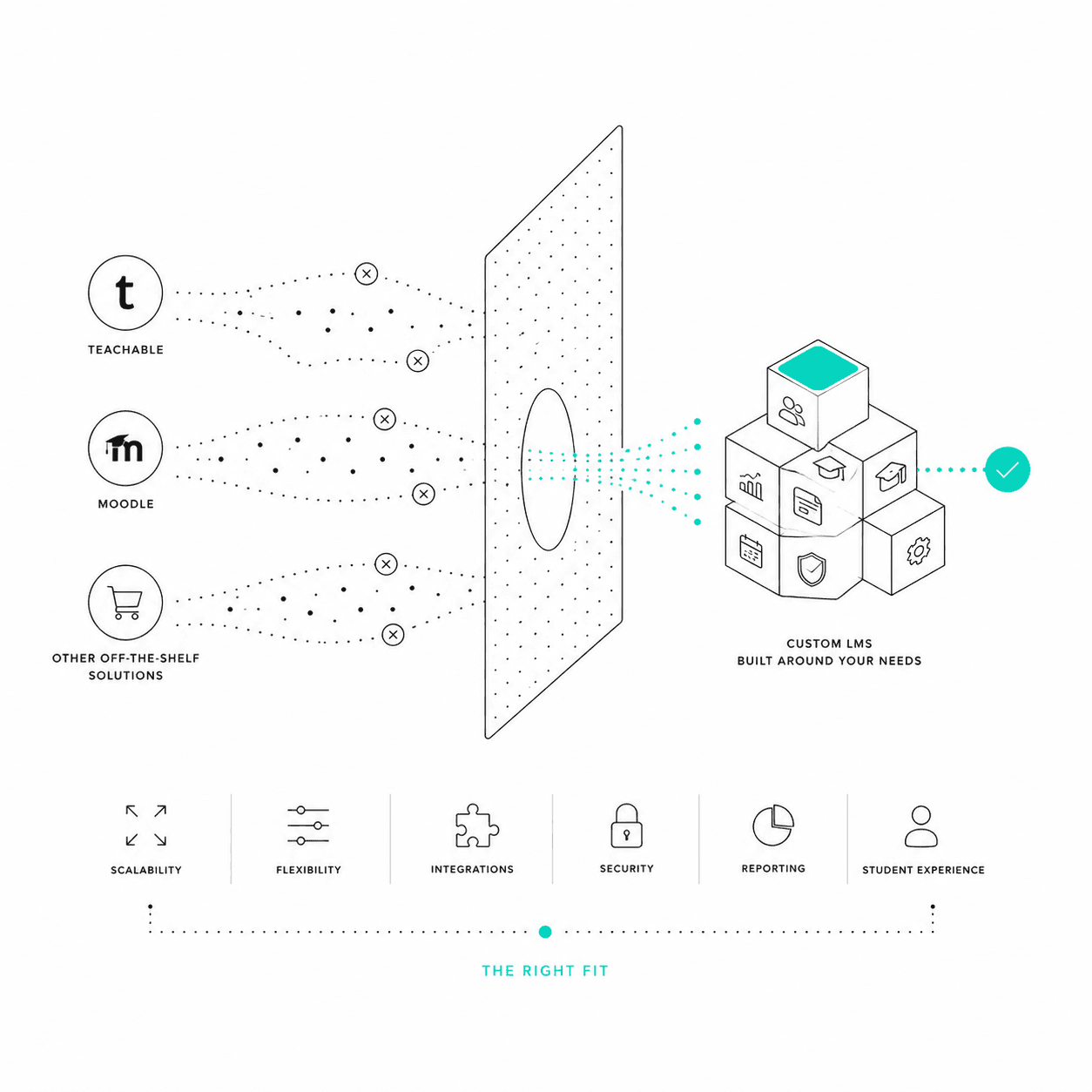
Every education provider hits this fork in the road: keep stretching an off-the-shelf tool, or invest in a platform built around how you actually teach. We've been on both sides — and having built a custom LMS that now manages 8,000+ students across 11 programs, we can tell you the honest answer: most institutions should start off-the-shelf, and a specific minority should absolutely go custom.
When off-the-shelf is the right call
Platforms like Teachable, Thinkific, or Moodle exist because 80% of course delivery is the same everywhere: host lessons, enrol students, take payments, issue certificates. If that describes your needs, buying is smarter than building. You'll launch in weeks, pay a predictable subscription, and get features you'd never prioritise on your own roadmap.
- You run a handful of self-paced courses.
- Your enrolment process is simple: pay, get access.
- Your team is small and nobody owns "the platform" as a job.
- You're still validating whether people want the program at all.
The breaking point
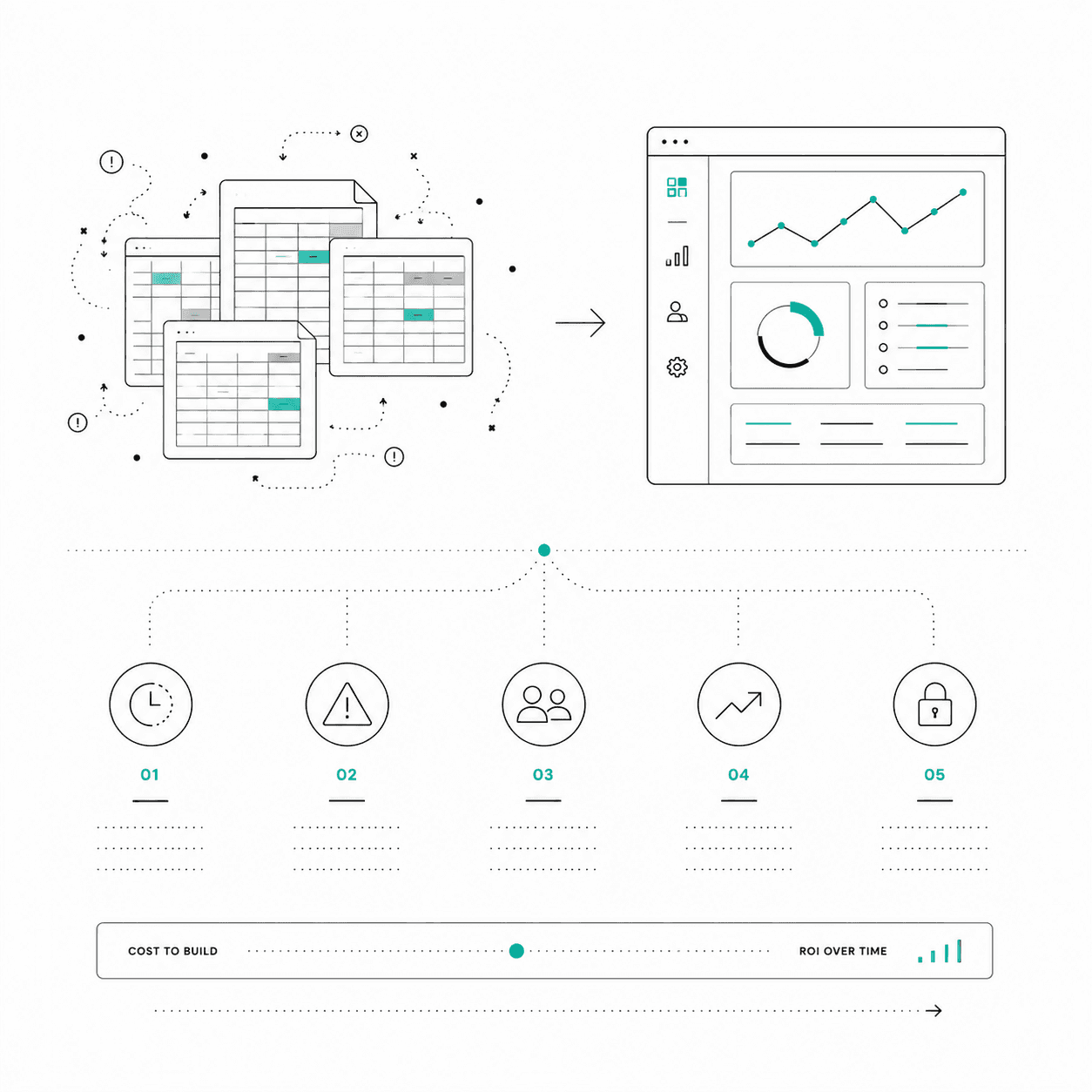
Off-the-shelf tools break down when your operations stop being generic. The signs are always the same: staff maintaining spreadsheets alongside the LMS to track what the LMS can't; manual steps between enrolment, payment, and class assignment; instructors working around the tool instead of through it; and pricing tiers that punish you for growing.
For Al Hadi Institute, the breaking point was scale and structure: multiple concurrent programs, cohort-based classes, custom enrolment rules, and administrative workflows no subscription product supported. What used to take days of manual work every term is now fully automated — because the system was designed around their actual operation, not a generic one.
What custom actually gets you
- Enrolment, payment, and class assignment as one automated flow.
- Admin dashboards that mirror how your staff already work.
- Your data in your database — reportable, exportable, yours.
- No per-student fees eating your margin as you grow.
- Features on your timeline instead of a vendor's roadmap.
The honest cost comparison
Custom development costs more upfront — there's no way around that. But run the numbers over three years: a subscription platform charging per student, plus the salary hours spent on manual workarounds, plus the growth you postpone because the tool can't support it. For institutions past a certain size, the custom build is routinely the cheaper option by year two.
Buy when your needs are generic. Build when your operations are your advantage.
If you're not sure which side of the line you're on, that's exactly what a discovery call is for — we'll tell you honestly if an off-the-shelf tool still fits, because a custom platform you didn't need is a bad project for everyone.