How to redesign your website without losing your SEO.
Redesigns kill rankings when URLs, canonicals, and sitemaps get rebuilt carelessly. The migration checklist we use to move sites between platforms without losing a single position.
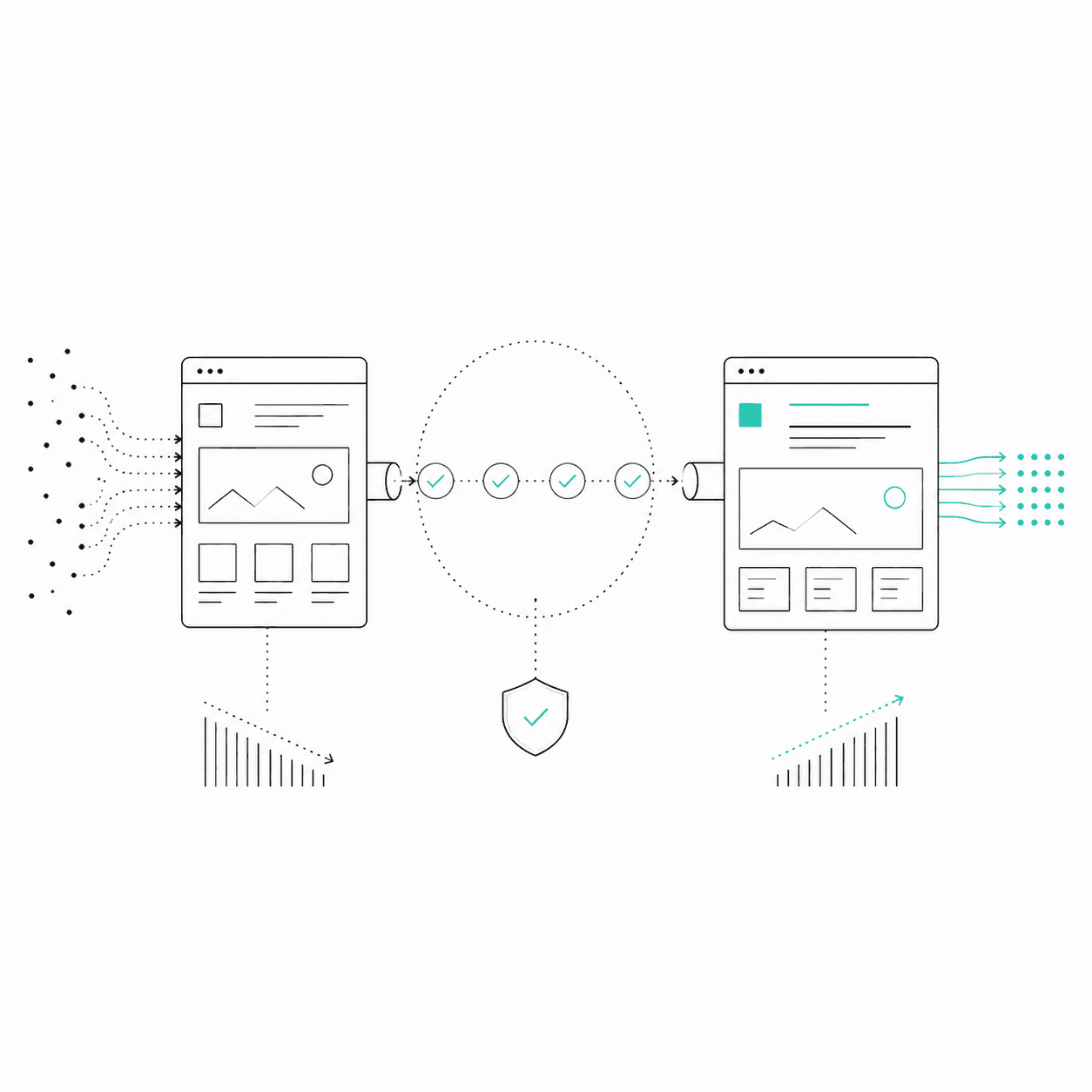
Here's the scenario that keeps business owners up at night, and rightly so: you launch a beautiful new website and your Google traffic falls off a cliff. It happens constantly — and it's almost never the design's fault. It's the migration's fault. Rankings live in the details nobody looks at: URLs, canonicals, sitemaps, redirects.
We've moved sites between platforms without losing a single position. This is the checklist we use.
Before the redesign: take inventory
- Export every URL that gets organic traffic (Search Console → Pages).
- Note which pages hold your rankings — they must survive intact.
- Record current titles and meta descriptions for those pages.
- Crawl the site so you have a complete "before" map.
The single most important rule follows from this inventory: keep your URLs identical wherever possible. A page that keeps its URL keeps its history. A page that moves needs a 301 redirect — and even a perfect redirect passes authority less cleanly than never moving at all.
The silent killers
Canonical tags pointing at the wrong domain
Every page has a canonical tag telling Google "this is my real address." Site builders love to quietly point canonicals at their own subdomain — we've audited live sites whose every page told Google the real site was the builder's subdomain, not the business's own domain. Google believes the tag, and your domain never accrues the authority. After any launch, view source on your key pages and check the canonical says your domain.
Sitemaps listing the wrong URLs
Same failure, different file: a sitemap that lists the platform's URLs instead of yours actively feeds Google the wrong site. Your sitemap should list exactly your canonical URLs — nothing else — and robots.txt should point to it.
Robots rules blocking crawlers
Staging-site noindex tags that survive launch. CDN "bot protection" toggles that block legitimate crawlers — increasingly including the AI crawlers that power ChatGPT and Claude search experiences, which is where a growing share of buying research happens. Audit what your robots.txt actually serves in production, not what you think it serves.
Launch week protocol
- Verify canonicals on every template type point to your domain.
- Submit the new sitemap in Search Console the day you launch.
- Test every redirect from your inventory list — by hand or by script.
- Watch Search Console's coverage report daily for a week; errors surface fast.
- Re-run your page-speed numbers — a faster rebuild is a ranking gain waiting to be claimed.
The upside nobody mentions
A migration done right isn't just damage prevention — it's usually the biggest SEO improvement a business ever makes. Real titles instead of template defaults, structured data on every page, faster loads, semantic HTML that machines can actually read. The redesign that businesses fear is, executed properly, the upgrade their rankings were waiting for.